

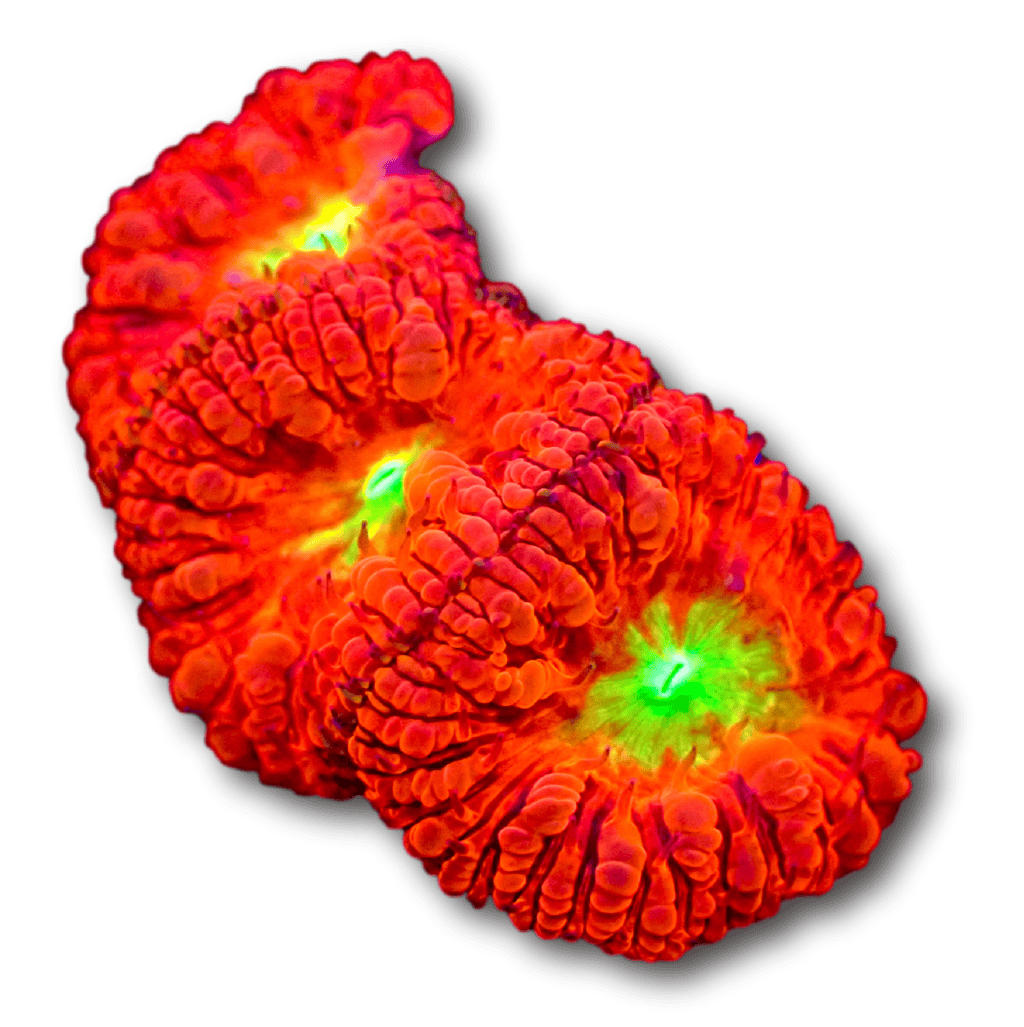
Acanthastrea corals, commonly known as Acan corals or Acanthastrea Lordhowensis, are popular among reef aquarium enthusiasts due to their vibrant colors and unique patterns. These corals belong to the family Mussidae and are native to the Indo-Pacific region. Acanthastrea corals are relatively hardy and adaptable, making them suitable for both beginner and experienced reef keepers. In this chapter, we will explore the basic care requirements for Acanthastrea corals.
When it comes to tank setup for Acanthastrea corals, there are a few key factors to consider. First, ensure that your aquarium has stable water parameters. Acan corals prefer a temperature range of 75-80°F (24-27°C) and a specific gravity of 1.023-1.026. Maintain proper water flow in the tank, as Acanthastrea corals prefer moderate water movement.
Proper lighting is crucial for the health and growth of Acanthastrea corals. They require moderate to high light intensity. LED lights or metal halide lamps with a color spectrum ranging from 10,000K to 20,000K are recommended for their optimal growth and coloration. However, it's important to acclimate the corals slowly to the new lighting conditions to prevent stress or bleaching.
A stable and well-maintained water chemistry is vital for the health of Acanthastrea corals. Regularly monitor and adjust the following parameters:
Acanthastrea corals are primarily photosynthetic and obtain a significant portion of their nutrition from the symbiotic algae called zooxanthellae living within their tissues. However, they also benefit from supplemental feedings. This chapter will cover the feeding and nutritional requirements of Acanthastrea corals.
As mentioned earlier, Acanthastrea corals have a symbiotic relationship with zooxanthellae algae. These algae utilize light energy to produce food through photosynthesis, providing the corals with essential nutrients. Therefore, providing adequate lighting in the aquarium is crucial for the corals' overall health and nutrition.
While Acanthastrea corals primarily rely on photosynthesis, they also benefit from supplemental feedings. Offer small, meaty foods such as mysis shrimp, brine shrimp, or finely chopped seafood once or twice a week. Feedings can be done at night when the coral's polyps are fully extended. It's important to avoid overfeeding, as it can lead to poor water quality and potential health issues.
Target feeding allows you to directly provide nutrition to individual corals. Using a feeding syringe or turkey baster, gently squirt small amounts of liquid coral food or zooplankton near the coral's mouth. This method ensures that the coral receives the food directly and minimizes competition from other tank inhabitants.
Proper maintenance and propagation techniques are essential for the long-term success of Acanthastrea corals. This chapter will cover the key aspects of maintaining and propagating these corals.
Address:
Verbindingsstraat 4A
3670 Oudsbergen
Belgium
Email: [email protected]
Bank: Belfius BE24 0689 3843 7338
BIC: GKCCBEBB
VAT: BE0752.724.156


